India Has 9 Active FTAs: Which Export Markets Should You Prioritise?
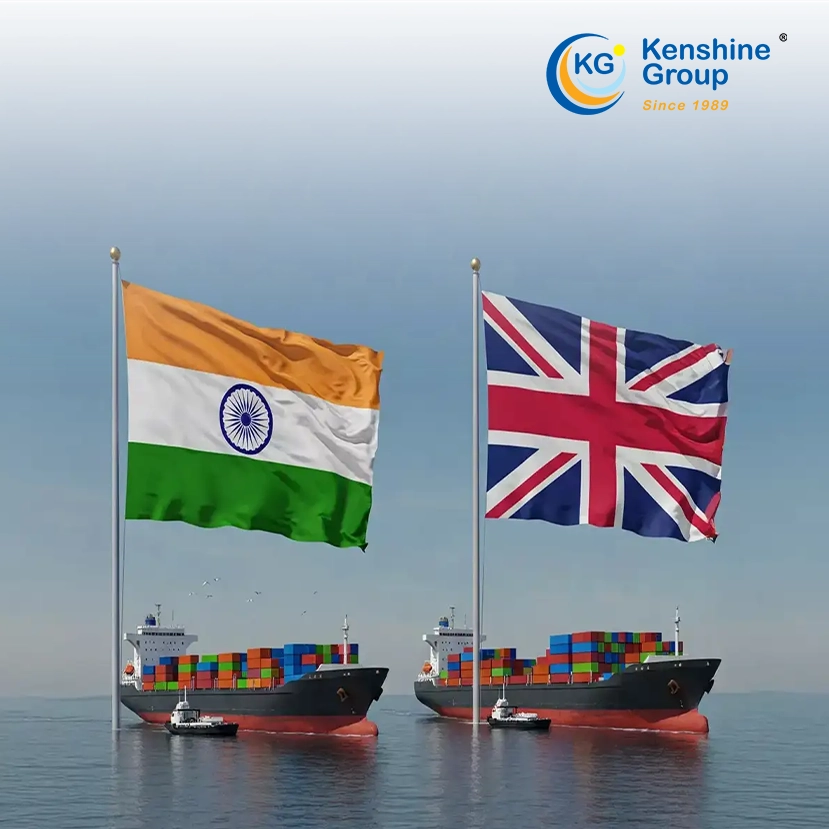
The biggest export opportunity isn't always the market with the lowest tariff. It's the one where your product, pricing and logistics work together. When the India-UK Free Trade Agreement (FTA) came into force in July 2026, Indian exporters shipped US$140 million worth of goods on the very first day. This includes textiles, engineering goods, marine products, processed food and gems & jewellery.
A few years earlier, the India-UAE Comprehensive Economic Partnership Agreement (CEPA) opened the doors to one of the world's busiest trading hubs. Before that, Australia joined India's growing FTA network through the Economic Cooperation and Trade Agreement (ECTA). Today, India has nine active Free Trade Agreements covering 42 countries. Moreover, negotiations are already underway for partnerships with the European Union and Peru.But which market will give your business the strongest commercial advantage? Here's how to decide which FTA markets deserve your attention first.
Step 1: Start With Your Product, Not the Country
One of the biggest mistakes exporters make is choosing a market simply because India has signed an FTA with it. Trade agreements don't create equal opportunities for every industry.
Instead, begin by asking - Which country gives my product the biggest competitive advantage? Here's where some of India's strongest opportunities currently lie.
|
Product Category |
Markets Worth Prioritising |
Why |
|
Engineering Goods |
UAE, Australia, UK |
Strong infrastructure and industrial demand with preferential tariff access |
|
Textiles & Apparel |
UK, UAE |
Lower import duties improve pricing competitiveness |
|
Leather & Footwear |
UK |
Significant tariff reductions under the India-UK FTA |
|
Pharmaceuticals |
Australia, Japan |
Mature healthcare markets with rising demand for Indian medicines |
|
Gems & Jewellery |
UAE, UK |
Established trading hubs and strong consumer demand |
|
Marine Products |
UK, Japan |
High seafood imports and improved market access |
For example, the UK FTA is expected to benefit labour-intensive sectors such as textiles, apparel, leather, footwear and marine products, while Australia's agreement has opened opportunities across engineering goods, pharmaceuticals and auto components. The takeaway is the best market for exports in India depends on what you manufacture.
Step 2: Don't Chase Zero Duty. Chase Growing Demand.
Tariff savings grab headlines. Market demand drives exports. Before entering any country, ask three questions:
- Is this country importing more of my product every year?
- Are Indian exporters already gaining market share?
- Can I realistically compete against existing suppliers?
Let's look at three major FTA markets.
UAE: A Gateway Beyond the Middle East
The UAE isn't just a market of around 10 million people. It's one of the world's largest re-export hubs.
Products entering Dubai are routinely redistributed across Saudi Arabia, Oman, Bahrain, Kuwait, East Africa and parts of Europe.
For exporters dealing in:
- Engineering products
- Chemicals
- Plastics
- Consumer goods
- Food products
- Jewellery
The UAE often serves as an entry point to an entire region rather than a single country. Another advantage is logistics.
Shipments from western Indian ports typically reach the UAE within 3 - 10 days. This allows businesses to replenish inventory faster and reduce the working capital tied up in transit. This is one reason why bilateral trade between India and the UAE crossed US$83.7 billion within two years of CEPA coming into force.
Australia: A High-Value Market
Australia removed tariffs on the vast majority of Indian exports under ECTA.
This has created opportunities across:
- Pharmaceuticals
- Engineering goods
- Textiles
- Auto components
- Machinery
However, exporters should also consider commercial realities. Australia has a population of around 27 million. This means demand volumes are naturally lower than markets such as the UK or the UAE.
That makes Australia particularly attractive for businesses selling specialised, premium or value-added products rather than high-volume, low-margin goods. For exporters that compete on quality rather than price alone, Australia can become a highly profitable long-term market.
United Kingdom: A New Opportunity for Labour-Intensive Industries
The India–UK FTA represents one of India's most significant trade agreements in recent years. The agreement provides preferential access on 99% of Indian tariff lines, benefiting sectors including:
- Textiles
- Apparel
- Leather
- Marine products
- Engineering goods
- Processed food
- Gems & jewellery
Within hours of implementation, exporters had already shipped US$140 million worth of goods under the agreement.
Take textiles as an example. Many Indian garments previously attracted UK import duties of up to 12%. Those duties have now been removed or significantly reduced for qualifying products. This allows Indian exporters to price more competitively against suppliers from countries such as Vietnam and China.
Step 3: Compare Total Landed Cost
A market may offer an 8% tariff advantage.
But if freight costs, inventory carrying costs and longer transit times adds up to your total expenses, the tariff benefit quickly disappears. That's why exporters should calculate total landed cost, not just customs duty.
Here's a simple comparison.
|
Market |
Approx. Transit Time from West India |
What It Means |
|
UAE |
5–12 days |
Faster replenishment and lower inventory costs |
|
Australia |
18–25 days |
Better suited for planned, higher-value shipments |
|
UK |
20–30 days |
Longer planning cycles and higher inventory requirements |
For businesses shipping seasonal products, every additional week in transit can affect cash flow, inventory planning and customer satisfaction.
Step 4: Don't Ignore Markets That Open Doors to Others
The smartest exporters don't always choose the biggest economy. They choose the market that creates the biggest network.
Take the UAE again. Many shipments entering Dubai don't stay in Dubai. They move onward to Saudi Arabia, Qatar, Bahrain, Kuwait and East Africa through well-established distribution networks.
Similarly:
- Singapore provides access to Southeast Asian markets.
- Japan and South Korea strengthen your presence in high-value East Asia.
- ASEAN member countries can become stepping stones into neighbouring economies.
Sometimes, one strategically chosen destination creates opportunities across an entire region.
Step 5: Make Sure You Actually Qualify for FTA Benefits
One of the biggest misconceptions surrounding FTAs is that every shipment automatically qualifies for reduced duties.
Most trade agreements operate under Rules of Origin, which determine whether a product genuinely qualifies as "Made in India."
Exporters generally need to demonstrate:
- Correct HS classification
- Certificate of Origin documentation
- Minimum value addition in India
- Supporting manufacturing records
Here's where businesses often run into trouble.
Imagine an exporter importing most of the raw materials from another country and carrying out only minimal processing in India. Even if the final shipment leaves from an Indian port, it may fail to meet the Rules of Origin requirements. That means the overseas buyer could end up paying the full import duty instead of the reduced FTA rate.
Step 6: Think Beyond Today's Orders
The stronger strategy is to choose markets based on where demand is likely to grow over the next five to ten years.
Consider what's happening globally. The UK is actively diversifying its sourcing relationships, creating fresh opportunities for Indian textiles, engineering products and processed foods.
The UAE continues investing in manufacturing, logistics, renewable energy and infrastructure. There's an increased demand for machinery, industrial equipment and construction-related products.
Businesses that establish relationships in these markets today are often better positioned when demand accelerates tomorrow. Export strategy should be built around future growth; not just today's purchase orders.
Final Thoughts
India's expanding network of FTAs has fundamentally changed the way exporters can approach international growth. The opportunity is no longer limited by market access.
The businesses that will benefit the most are the ones that understand where their products have the strongest demand, where logistics remain efficient and where they can build long-term competitive advantage.
That's exactly where Kenshine fits in. With over 35 years of experience across global trade lanes, Kenshine supports exports in India by making sure the market you choose is one you can deliver reliably. Connect with Kenshine to build your export strategy today.